
Essilor Stellest Lenses for Myopia Control
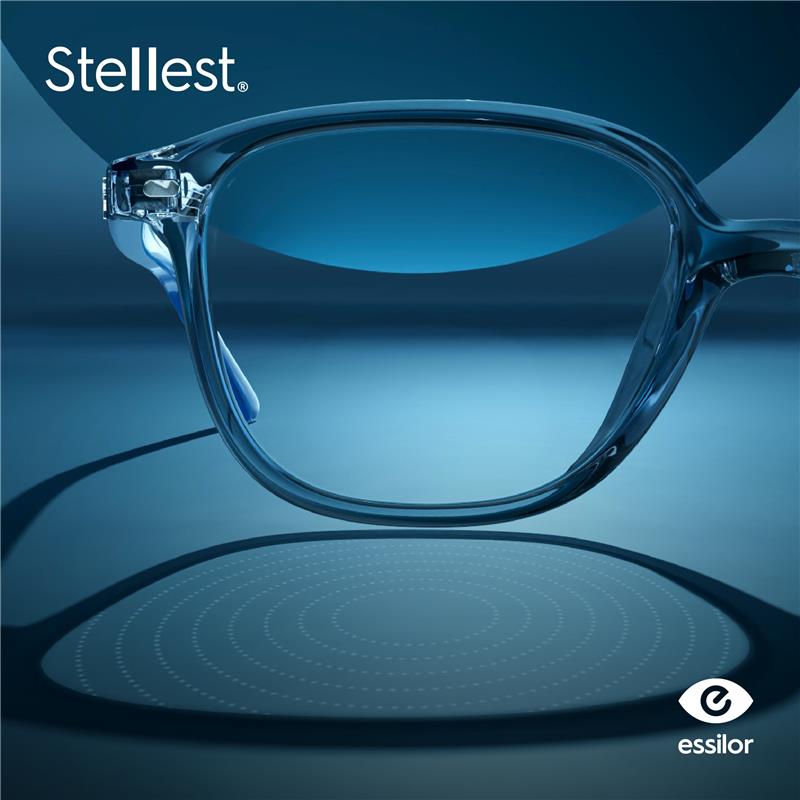
Meet Essilor Stellest — More Than Just Regular Glasses
The problem: Myopia (nearsightedness) — increasingly common in children and teens globally — often worsens over time. Standard glasses only correct vision, but don’t do anything about the underlying progression of myopia.
The solution: Essilor Stellest lenses are a new generation of spectacle lenses designed not just to correct myopia, but to slow its progression. These lenses are the result of decades of research by EssilorLuxottica and are part of a broader effort to combat rising myopia rates worldwide.
How Stellest Works — Smart Optics Behind the Lenses
Stellest lenses combine two “zones” in each lens:
A central single-vision zone — for sharp, clear vision, just like regular glasses.
A surrounding “myopia control” zone — created using the brand’s proprietary H.A.L.T. (Highly Aspherical Lenslet Target) technology. This zone contains more than 1,000 microscopic aspherical “lenslets,” arranged in concentric rings around the central zone.
These lenslets don’t act like traditional lenses; instead, they create a subtle “volume of myopic defocus.” In other words: they redirect some light in a way that gives the retina a gentle signal — a signal thought to slow down the natural tendency of the eye to elongate. Eye elongation is the structural change behind worsening myopia.
The promise: by “tricking” the eye’s growth mechanism, Stellest lenses can help reduce how quickly (or how severely) myopia develops over time — while still giving clear vision for daily activities.
Clinical Results: What the Evidence Shows
What sets Stellest apart is not just clever optics — but real clinical data supporting its effectiveness:
Two-year clinical trials demonstrated a ~71% reduction in myopia progression (measured in prescription strength) compared to children wearing standard single-vision lenses.
The same trials showed about a 53% slowdown in axial eye elongation (eye lengthening), which is a key structural change behind progressive myopia.
Long-term data is also very promising: after six years of wear (starting from ages 8–13, with follow-up into adolescence/young adulthood), average myopia progression was reduced by ~1.95 D (versus ~3.45 D for a control group), a ~57% reduction. Axial elongation was similarly reduced by about 52%.
Over four years, the lenses saved on average more than 1.25 diopters of myopia compared to single-vision controls.
In short: the data suggests Stellest is among the most effective spectacle-lens options currently available for myopia control in children — and with consistent wear, can significantly slow the progression.
Who It’s For — And When It Helps Most
Stellest lenses are primarily aimed at children and adolescents — a period when myopia is likely to worsen. The strongest evidence for myopia control comes from regular, full-time wear (studies typically recommend wearing them 12+ hours per day).
Because the lenses don’t change the “center vision vs peripheral defocus” balance, kids get the benefit of good vision during day-to-day life while giving their eyes a “slow-down” signal against elongation.
Also — long-term data suggests that benefits are sustained over many years, which is especially relevant for children diagnosed early.
What to Know — Limitations & What to Watch Out For
While Stellest is promising, it’s not magic. Here are some considerations and caveats that are good to be aware of:
Wearing time matters: The myopia-control effect is strongest when lenses are worn for many hours daily. If wear is inconsistent or minimal, benefits will likely diminish.
Not all myopia is the same: The clinical studies mostly involve children whose myopia is still progressing. For someone whose prescription has stabilized, the benefit may be limited.
Visual adaptation: Because of the specialized optics — central clear zone + peripheral defocus — some people (especially kids) may take time to adjust.
Availability (at least until recently): While these lenses have been available in many countries for years, only recently has regulatory/market clearance been granted in some regions. This means access may vary depending on location.
Why Many Eye-Care Experts Believe Stellest is a Game-Changer
- It shifts the approach from “correct myopia” to “manage & slow its progression.” That’s a major paradigm shift.
- Backed by longitudinal clinical data — up to six years — showing consistent reduction in both refractive error and structural eye changes.
- Provides a non-invasive, easy-to-wear, spectacle-based solution, which is often more practical for children than contact lenses or more intensive interventions.
- Because early-onset and quickly progressing myopia increases the risk of high myopia later (with associated complications), slowing myopia early can have long-term eye-health benefits.
Should You Consider Essilor Stellest? (And When to Talk to an Eye Doctor)
If you — or your child — are experiencing progressive myopia, especially at a young age, Stellest lenses are worth discussing with your eye-care professional. They’re particularly relevant for:
Kids who have already begun wearing glasses or have myopia that’s increasing year over year
Families wanting to proactively reduce the lifelong risk of high myopia and its complications
People seeking a spectacle-based (not contact lens) myopia-management solution
Helpful Articles
article_category: products
article_category: psychiatry
article_category: faqs
article_category: cats
article_category: general
article_category: services
article_category: technology
article_category: dogs
article_category: restorative
article_category: vision therapy
article_category: contact lenses
article_category: health
article_category: conditions
article_category: eye surgery co-management
article_category: exotic
article_category: cosmetic
article_category: surgical procedures
article_category: aesthetics
article_category: preventative
article_category: ocular disease management
article_category: eyeglasses
article_category: eye health
article_category: large animal
[]
article_category: psychiatry
article_category: faqs
article_category: cats
article_category: general
article_category: services
article_category: technology
article_category: dogs
article_category: restorative
article_category: vision therapy
article_category: contact lenses
article_category: health
article_category: conditions
article_category: eye surgery co-management
article_category: exotic
article_category: cosmetic
article_category: surgical procedures
article_category: aesthetics
article_category: preventative
article_category: ocular disease management
article_category: eyeglasses
article_category: eye health
article_category: large animal
[]
Flowbite is an open-source library of interactive components built on top of Tailwind CSS including buttons, dropdowns, modals, navbars, and more.
Check out this guide to learn how to get started and start developing websites even faster with components on top of Tailwind CSS.

All Eye Care Services
Find personalized eye care excellence with our comprehensive services. From eye exams to advanced diagnostics, trust us for all your vision needs.
Keep In Touch
For non-urgent questions or to learn more about our services, contact us today!
© 2026 Eye Connection. All rights Reserved - Accessibility Statement - Privacy Policy - Sitemap
Managed and Designed by 